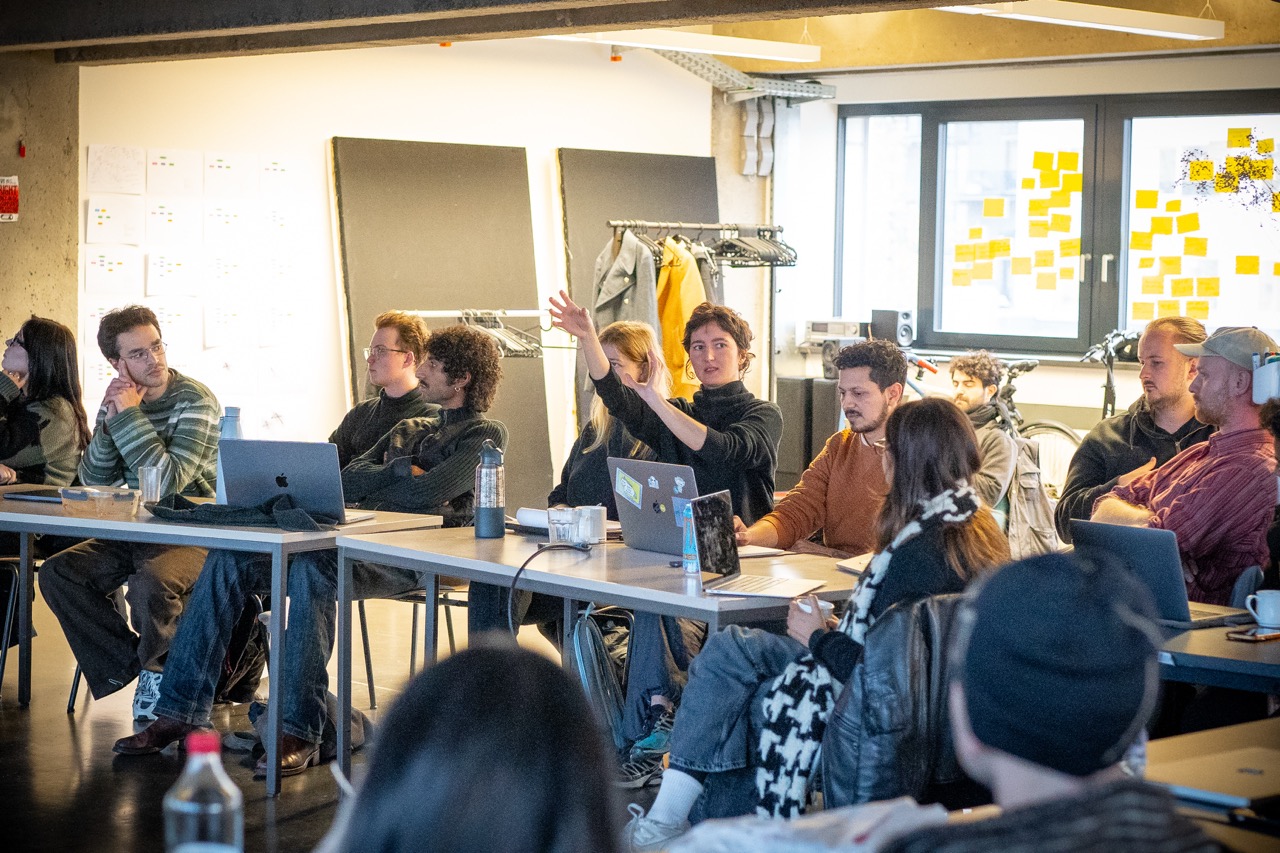
Last week, students from the sixth and seventh cohorts of Design & Computation came together to mark the end of their first shared projectsprint, presenting the outcomes of two weeks of collaborative research and experimentation.
The sprint followed a particular approach to interdisciplinary exchange: students from the sixth cohort introduced their ongoing research topics to the seventh cohort, who were then invited to develop “counter-projects” in response. Rather than simply continuing the existing work, these projects could challenge its assumptions, broaden its scope, introduce alternative methodologies, or develop complementary perspectives.
Through this process, different disciplinary backgrounds, research methods, and ways of thinking came into conversation. Critique became a productive part of the design process, opening up new questions and directions for further investigation.
The projects addressed a wide range of topics, including forensic analysis and verification of AI-generated images, the role of GLP-1 medications in healthcare systems, and decolonial approaches to archiving and research.The final presentations offered a first shared look at how these different approaches intersected, revealing both points of friction and unexpected connections. A central question emerged around how research can benefit from perspectives that challenge its initial assumptions, and how methodological differences can become opportunities for developing new forms of inquiry.
As the semester continues, we look forward to seeing how these conversations, questions, and collaborations evolve.Special thanks also go to the artists’ collective led by Maria Schrader, who, for the second time since the closure of our laboratory at the TU Berlin, have generously made their premises available to the course for several weeks.